Catch Hook and Crisp: A Fish and Chips Business Plan Example for Cape Town
Planning to open a fish and chips shop in South Africa? This illustrative business plan for Catch Hook and Crisp Pty Ltd shows how a single 140 m², 24-seat quick-service restaurant on a Cape Town commuter corridor can be structured, costed and funded to the standard that banks, development finance institutions and private investors expect.
The opportunity
Takeaway and fast-food outlets earn roughly 40% of South Africa’s food and beverage industry income, and consumers are moving towards fish as meat prices rise. Yet seafood quick-service remains thinly branded: Fishaways runs about 242 outlets against KFC’s 1,200. The plan sizes the Cape Town seafood takeaway market at around R490 million a year and needs only about 2% of it to hit its targets, so site selection and execution, not market size, set the ceiling.
The concept
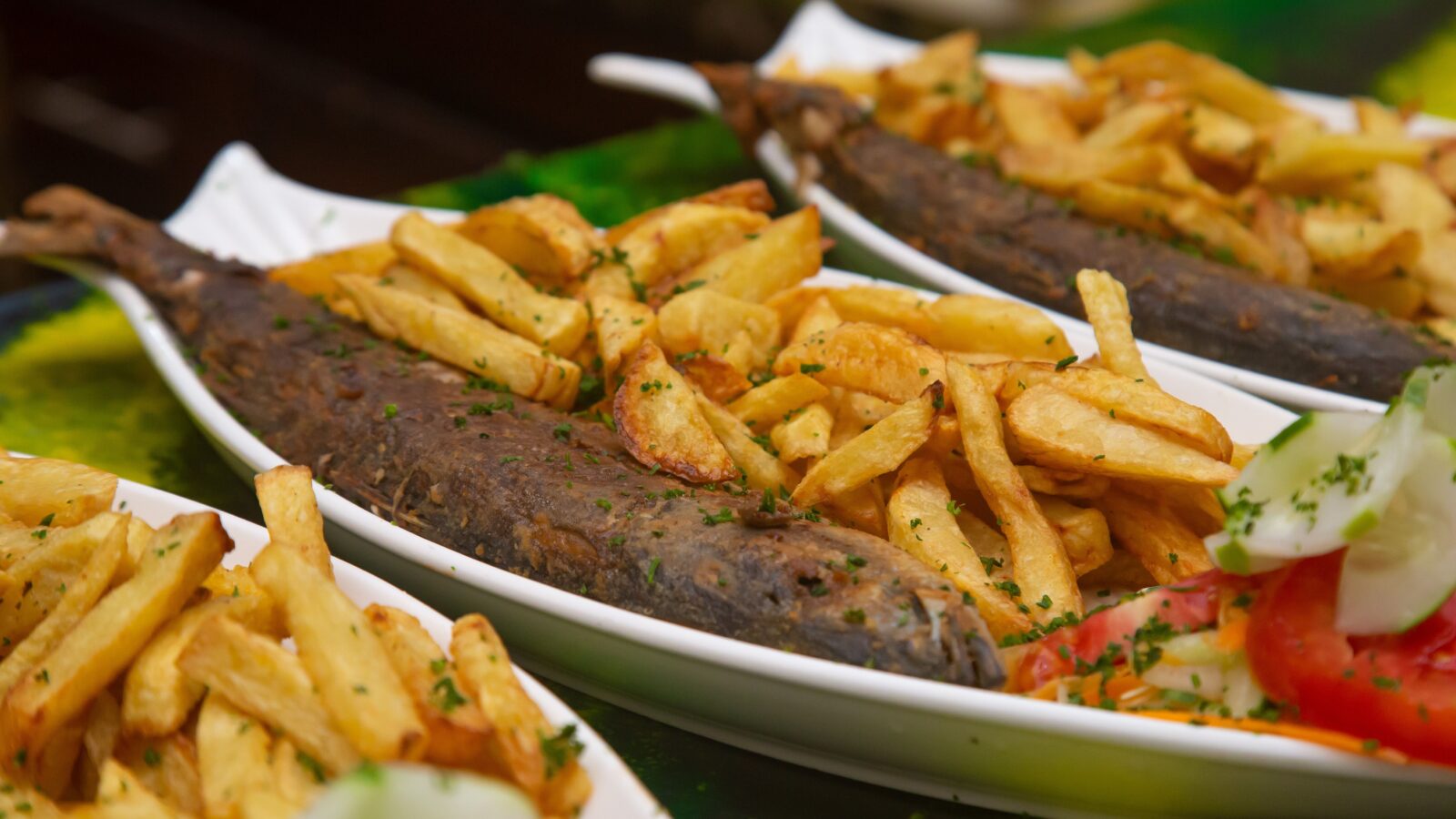
Catch Hook and Crisp serves MSC-certified Cape hake battered to order, fresh-cut slap chips, calamari and seasonal snoek in under six minutes. A focused 15-line menu runs from a R55 Russian and chips to a R529 Cape Feast, anchored by an R89 hake and chips hero meal. Orders come through the counter, a self-order kiosk, web and WhatsApp click-and-collect and the delivery apps, with delivery capped at 22% of orders because it earns around 30% less contribution per order.
The numbers
The flagship needs R4.5 million: R2.4 million equity, a R1.5 million senior term loan over 72 months with a 12-month capital moratorium, and R0.6 million of equipment asset finance. That covers R3.18 million of fit-out and equipment, R480,000 of pre-opening costs and a R639,000 cash reserve. At maturity the store trades 240 orders a day at a R134 average spend, delivering a 62.6% gross margin, R10.2 million in Year-3 revenue and R1.4 million EBITDA (14.1%). EBITDA break-even sits at 176 orders a day, minimum debt service cover is 2.10x, and the base case returns a 39% equity IRR and 4.4x money multiple over five years.
What makes it investor-ready
The plan separates verified market data from management assumptions and projections on every page. It quantifies what moves profit (a one-point change in food cost shifts Year-3 EBITDA by about R100,000) and openly shows that the downside case breaches the lending covenant in Year 2 while staying cash-positive. It scores five Cape Town location types on weighted criteria, sets seven food-safety critical control points under Regulation R638, and gates outlets 2 and 3 behind hard tests: 12 months at a 13% EBITDA margin or better, DSCR of at least 1.5x and documented operating procedures. A franchise model is costed too, including the honest finding that royalties would halve a franchisee’s margin unless volumes beat the flagship.
Who this example is for
Use it as a benchmark if you are opening a takeaway, seafood restaurant or QSR franchise in South Africa, or if you lend to or invest in food-service operators. The figures are illustrative, built on commercially reasonable assumptions and published market data rather than a secured site or audited results.
Need a plan like this for your own restaurant? Our team prepares investor-grade business plans built around your site, menu and numbers, ready for banks, DFIs and equity partners.