A Journey Through Wealth, Inequality, and the Promise of Transformation
“The test of our progress is not whether we add more to the abundance of those who have much; it is whether we provide enough for those who have too little.” — Franklin D. Roosevelt
A Nation of Contrasts
In the heart of Johannesburg, where the gleaming towers of Sandton pierce the African sky, a remarkable story unfolds. South Africa, a nation born from the ashes of apartheid and rebuilt on the foundations of hope and reconciliation, stands today as Africa’s undisputed capital of wealth. With 41,100 millionaires calling it home—representing more than one-third of all millionaires on the entire continent—South Africa embodies both the extraordinary potential of the African economy and the haunting persistence of inequality.
Yet behind these impressive numbers lies a profound paradox. How can a nation simultaneously celebrate such concentration of wealth while grappling with one of the world’s highest inequality rates? This article explores not just the statistics of prosperity, but the human stories, the systemic challenges, and most importantly, the pathways toward a more inclusive future that honors both economic dynamism and social justice.
Drawing on the 2025 Africa Wealth Report compiled by Henley & Partners in collaboration with New World Wealth, alongside broader research on South African economic development, we examine what it truly means for a nation to be wealthy—and who gets to share in that wealth.
Part I: The Numbers That Tell a Story
Africa’s Wealth Capital
The African continent, with its 1.4 billion people and vast natural resources, hosts approximately 122,500 millionaires, 348 centi-millionaires (individuals with net assets exceeding US$100 million), and 25 billionaires. Yet the distribution of this wealth tells a tale of profound geographic concentration:
• South Africa: 41,100 millionaires
• Egypt: 14,800 millionaires
• Morocco: 7,500 millionaires
• Nigeria: 7,200 millionaires• Kenya: 6,800 millionaires
South Africa’s dominance is staggering. Its millionaire population equals the combined totals of the next five wealthiest African nations. This concentration reflects more than mere numbers—it reveals the legacy of sophisticated financial markets, diversified economic sectors, and strategic geographic positioning that have long made South Africa the gateway to African investment.
Cities of Gold: Johannesburg and Cape Town
Within South Africa itself, wealth clusters in its two great metropolises. Johannesburg, the economic engine of not just South Africa but the entire continent, hosts approximately 11,700 millionaires—the highest concentration in Africa. Built on gold and diamonds, Johannesburg has evolved into a global financial center where old mining wealth mingles with new tech fortunes, where family dynasties meet self-made entrepreneurs.
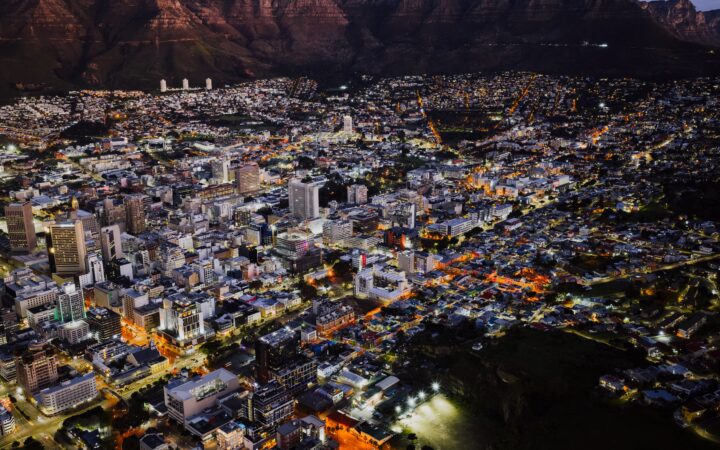
Cape Town, with its 8,500 millionaires, tells a different story. Nestled between Table Mountain and two oceans, it has become a magnet for centi-millionaires seeking not just investment opportunities but quality of life. The city has witnessed a remarkable phenomenon: lifestyle migration, where global wealth chooses Cape Town’s Mediterranean climate, natural beauty, and cosmopolitan culture. Real estate values in neighborhoods like Clifton, Camps Bay, and Constantia now rival those of major European capitals.
Consider the story of Koos Bekker, who transformed Naspers from a traditional publishing house into a global internet and entertainment powerhouse. His early investment in Chinese tech giant Tencent—now worth tens of billions—exemplifies the kind of visionary thinking that has created South African fortunes. Yet Bekker himself has spoken eloquently about the responsibilities that come with such wealth, advocating for investments in education and technology that can benefit all South Africans.
The Winds of Change: Shifting Continental Patterns
Yet even as South Africa maintains its lead, the continental landscape is shifting. Nigeria, once predicted to overtake South Africa in millionaire numbers, has seen a contraction in its wealthy population amid currency devaluation, security challenges, and infrastructure deficits. Meanwhile, countries like Rwanda and Mauritius, though smaller in absolute numbers, are experiencing percentage growth rates that signal emerging centers of African prosperity. The wealth map of Africa is being redrawn, and South Africa’s future position is anything but guaranteed.
Part II: The Historical Roots of Prosperity and Division
A Legacy Forged in Gold and Diamonds
To understand South Africa’s current wealth concentration, we must journey back to 1886, when gold was discovered on the Witwatersrand. Almost overnight, a sleepy farming region transformed into the world’s richest gold field. The Kimberley diamond rush had preceded it by a decade, and together these mineral discoveries laid the foundation for South Africa’s economic dominance.
But this prosperity came at an enormous human cost. The mining magnates—men like Cecil Rhodes, Barney Barnato, and later Ernest Oppenheimer—built vast fortunes on a system that exploited Black African labor while systematically denying workers basic rights, fair wages, and economic opportunity. The 1913 Natives Land Act and subsequent apartheid legislation entrenched these inequalities in law, creating a dual economy where wealth accumulated at the top while the majority was locked out of ownership, quality education, and economic participation.
The Johannesburg Stock Exchange, established in 1887, became Africa’s largest and most sophisticated financial market. South African companies pioneered mining technologies that spread worldwide. The nation developed world-class banking, insurance, and investment sectors. By the mid-20th century, South Africa was the industrial powerhouse of the continent—but this success was built on a foundation of systematic exclusion.
The Promise of 1994 and the Challenge of Transformation
When Nelson Mandela walked free from prison in 1990 and apartheid officially ended in 1994, South Africa embarked on one of history’s most ambitious projects: transforming a deeply divided, racially stratified economy into an inclusive democracy. The new government inherited sophisticated institutions and infrastructure alongside devastating inequality. The Gini coefficient—a measure of inequality where 0 represents perfect equality and 1 represents maximum inequality—stood at approximately 0.59 in 1993, among the world’s highest.
Three decades later, that Gini coefficient has risen to approximately 0.63, making South Africa the most unequal country in the world according to World Bank measures. This is the central paradox: even as democracy flourished, as Black Economic Empowerment policies created a new Black middle class and produced billionaires like Patrice Motsepe and Cyril Ramaphosa, overall inequality has deepened rather than diminished.
The statistics are sobering. According to Oxfam’s 2024 research, the wealthiest 10% of South Africans own more than 85% of household wealth, while the bottom 50% own less than 5%. In terms of income inequality, the richest 10% earn 65% of all income. Yet these numbers, while stark, don’t capture the full human dimension of the challenge.
Part III: Beyond the Statistics—Stories of Struggle and Success
The New Generation of Wealth Creators
Despite the challenges, South Africa continues to generate remarkable success stories that inspire a continent. Consider Vusi Thembekwayo, who grew up in a township and became one of Africa’s most successful entrepreneurs and speakers. Or Rapelang Rabana, who founded Yeigo Communications as a teenager and later sold it, becoming one of Africa’s youngest self-made millionaires. These stories matter because they demonstrate that pathways to prosperity exist even amid structural inequality.
The technology sector has emerged as a new frontier for wealth creation. South African fintech companies like Yoco and startups in Cape Town’s burgeoning tech scene are attracting global investment and creating millionaires who look very different from the mining magnates of old. These entrepreneurs often speak passionately about using their success to create opportunities for others, investing in education, mentorship, and inclusive business models.
Patrice Motsepe, South Africa’s first Black billionaire, established the Motsepe Foundation and signed the Giving Pledge, committing to donate half his wealth to charitable causes. His journey from lawyer to mining entrepreneur to philanthropist illustrates both the possibilities and responsibilities of wealth creation in contemporary South Africa. “I dream of the day when each and every South African will have food on the table, a roof over their head and will be able to send their children to school,” Motsepe has said, embodying a vision of prosperity that extends beyond individual success.
The Daily Reality of Inequality
Yet for every Motsepe or Rabana, there are millions of South Africans for whom wealth remains an impossible dream. The official unemployment rate hovers above 32%, and among youth aged 15-24, it exceeds 60%—one of the highest rates globally. In townships across the country, where the majority of Black South Africans still live, poverty remains endemic. Access to quality education, healthcare, and basic services remains profoundly unequal.
The spatial legacy of apartheid persists. In Cape Town, you can stand on the slopes of Table Mountain and see the stark division: affluent neighborhoods with swimming pools and manicured gardens cascading down toward the sea, while inland, informal settlements and townships stretch to the horizon. In Johannesburg, Sandton’s wealth exists mere kilometers from Alexandra township, where hundreds of thousands live in crowded conditions with limited infrastructure.
This inequality isn’t just morally troubling; it’s economically inefficient. South Africa loses immense potential when talent goes undeveloped, when the next generation of entrepreneurs can’t access education or capital, when brilliant minds are trapped by circumstances of birth. The question facing South Africa is whether it can find a way to maintain its wealth-generating capacity while dramatically expanding access to economic opportunity.
Part IV: The Dynamics of Wealth Mobility and Migration
The Brain Drain Challenge
One of the most concerning trends for South Africa’s future is the emigration of high-net-worth individuals. The decade preceding the 2025 report witnessed a net outflow of millionaires, as concerns about political stability, infrastructure degradation (particularly the electricity crisis known as ‘load shedding’), and security drove wealthy South Africans to seek opportunities elsewhere.
Popular destinations include the United Kingdom, Australia, Portugal, and the United Arab Emirates. Between 2013 and 2023, South Africa lost an estimated 18,000 millionaires to emigration. These individuals take not just capital but also skills, networks, and entrepreneurial energy. Each departing millionaire represents not just a single fortune but potentially dozens of jobs, mentorship opportunities, and investments in local communities that will never materialize.
The electricity crisis exemplifies the infrastructure challenges driving emigration. Eskom, the state-owned power utility, has subjected South Africans to rolling blackouts for over a decade, with some periods seeing scheduled power cuts reaching Stage 6—meaning up to 6 hours without electricity daily. For businesses, the costs are enormous. For wealthy individuals with global mobility, it becomes a decisive factor in relocation decisions.
The Case for Optimism: Retention and Return
Yet the story isn’t purely one of exodus. Many wealthy South Africans remain deeply committed to the country, investing in solutions rather than simply departing. Private sector initiatives have proliferated: companies installing their own renewable energy systems, communities forming private security arrangements, businesses investing in skills training programs. This resilience and problem-solving capacity represents a crucial form of social capital that statistics alone cannot capture.
Moreover, there are signs of return migration. The global pandemic prompted some South Africans to reconsider the work-from-anywhere lifestyle, with Cape Town in particular experiencing an influx of ‘digital nomads’—both South African expats returning and international remote workers attracted by the city’s lifestyle, relatively low cost of living, and time zone advantages for global business. The African Continental Free Trade Area, launched in 2021, presents new opportunities for South African businesses to expand across the continent, potentially creating reasons for wealth creators to stay or return.
Part V: Future Projections and the Path Forward
The 65% Growth Projection: Promise and Prerequisites
The Africa Wealth Report projects that the continent’s millionaire population could increase by 65% over the next decade. For South Africa, this would mean potentially adding tens of thousands of millionaires, further cementing its position as Africa’s wealth capital. But this projection is not a prediction—it’s a possibility, contingent on numerous factors aligning favorably.
What would need to happen for South Africa to realize this potential? First, resolution of the electricity crisis through a combination of renewable energy investment, private sector participation, and Eskom restructuring. Second, political stability and policy certainty that encourages domestic and foreign investment. Third, education system reforms that produce the skilled workforce needed for a knowledge economy. Fourth, infrastructure investment in transportation, telecommunications, and basic services. Fifth, genuine progress on inclusive economic policies that expand the base of economic participants.
None of these prerequisites is impossible. South Africa has demonstrated remarkable capacity for transformation before. The peaceful transition from apartheid to democracy, the hosting of the 2010 FIFA World Cup, the development of world-class infrastructure in specific sectors—all show what is achievable when national will aligns with effective execution.
Reimagining Wealth: Toward an Inclusive Prosperity
The crucial question is not merely whether South Africa can increase its millionaire count, but whether it can do so while fundamentally addressing inequality. This requires moving beyond the binary of wealth creation versus redistribution toward models that generate inclusive growth.
Educational initiatives offer one pathway. Programs like the Allan Gray Orbis Foundation, which provides full scholarships to promising students from disadvantaged backgrounds, demonstrate how wealth can create opportunity. The foundation doesn’t just fund education; it provides mentorship, leadership training, and networks—the invisible infrastructure of success that privileged families take for granted.
Entrepreneurship ecosystems present another avenue. Organizations like the Anza Capital and the Knife Capital have focused on funding early-stage South African startups, creating pathways for new entrepreneurs to access capital that was historically available only to connected elites. The Savannah Fund and other venture capital firms increasingly focus on inclusive investment criteria, seeking founders from diverse backgrounds.
Employee ownership models are gaining traction. Companies like Daily Maverick, the investigative journalism outlet, have pioneered employee ownership structures that distribute wealth more broadly. The broader Economic Empowerment frameworks, despite their flaws and implementation challenges, have created genuine pathways for Black South Africans to enter sectors previously closed to them.
The financial sector itself is evolving. Digital banking innovations like TymeBank and Bank Zero are expanding access to financial services among previously unbanked populations. Microfinance institutions and community investment funds are creating alternative pathways to capital accumulation. These may not create millionaires overnight, but they build the foundation of financial inclusion that is prerequisite to broader wealth generation.
Part VI: What Does It Mean to Be Wealthy?
Beyond Net Worth: Measuring True Prosperity
Perhaps the deepest question this analysis raises is definitional: what does it mean for a nation to be wealthy? If we measure wealth purely in terms of millionaire counts and GDP, South Africa is unquestionably Africa’s richest nation. But if we measure wealth in terms of broad-based prosperity, access to opportunity, social cohesion, and human development, the picture becomes far more complex.
The United Nations Human Development Index, which considers life expectancy, education, and per capita income, ranks South Africa 109th globally—middle of the pack despite its economic output. This gap between economic production and human development outcomes reveals the fundamental challenge: wealth exists, but it doesn’t flow to where it’s needed most.
Consider a thought experiment: Would South Africa be better off with 50,000 millionaires and a Gini coefficient of 0.65, or with 30,000 millionaires and a Gini coefficient of 0.50? The answer reveals our values. The first scenario represents more absolute wealth; the second represents more equitable distribution. Most would choose the second, suggesting that our intuition recognizes that true prosperity is measured not just by peaks of wealth but by the elevation of the entire economic landscape.
The Social Cost of Inequality
The costs of extreme inequality extend far beyond economics. Crime rates in South Africa remain among the world’s highest, with property crime, violent crime, and organized criminal activity all linked to underlying economic desperation and lack of opportunity. The wealthy respond by building higher walls, hiring more security, creating gated communities—a form of private retreat from public life that fragments society.
Political instability and polarization correlate strongly with inequality. When large segments of the population feel economically excluded, they lose faith in democratic institutions and become susceptible to populist promises or radical solutions. The rise of the Economic Freedom Fighters, a radical left political party, draws support precisely from communities that have seen little benefit from democratic transformation.
Health outcomes diverge dramatically by wealth. Life expectancy, infant mortality, and disease burden all show stark patterns correlated with economic status. The COVID-19 pandemic exposed these disparities with brutal clarity: wealthy South Africans accessed private healthcare and could isolate at home, while informal settlement residents faced impossible choices between economic survival and health protection.
These are not just statistics; they represent millions of individual tragedies, lives constrained by preventable circumstances, potential unrealized because of zip codes and birth circumstances rather than talent or effort.
Part VII: Lessons from South Africa for Africa and the World
What Other Nations Can Learn
South Africa’s experience offers crucial lessons for other African nations pursuing economic development. First, wealth creation and wealth distribution are not automatically aligned. Economic growth can deepen inequality if not accompanied by deliberate inclusive policies. Ghana, Rwanda, Ethiopia, and other African nations experiencing rapid growth should note this carefully.
Second, infrastructure investment cannot be deferred indefinitely. South Africa’s electricity crisis demonstrates how neglect of basic systems eventually constrains even a sophisticated economy. Nations must balance competing demands for health, education, and infrastructure investment, but infrastructure cannot be repeatedly postponed.
Third, education is the most powerful lever for inclusive prosperity. Countries like Vietnam and South Korea transformed themselves through massive investment in quality education. South Africa’s education challenges—with vast disparities in quality between privileged and township schools—show what happens when education systems reproduce rather than reduce inequality.
Fourth, creating a millionaire class is relatively straightforward in resource-rich or strategically positioned nations. Creating broad-based prosperity requires different policies: progressive taxation, quality public services, labor market regulations that protect workers while encouraging employment, and social safety nets that provide security without creating dependency.
Global Implications
South Africa’s inequality challenge mirrors global patterns. Worldwide, wealth concentration has increased over recent decades. The richest 1% globally now own more wealth than the bottom 50% of humanity. South Africa’s experience, compressed and intensified by its particular history, offers a preview of challenges that many societies face.
The question facing South Africa—can a society sustain extreme inequality indefinitely?—is increasingly relevant worldwide. The answer matters not just for South Africans but for anyone interested in the future of democratic capitalism. If the South African model proves unsustainable, if inequality eventually undermines both prosperity and stability, it serves as warning. If South Africa finds pathways to inclusive growth, it offers hope and practical lessons.
Part VIII: A Call to Action and Hope
For South Africa’s Millionaires: The Stewardship Imperative
To South Africa’s 41,100 millionaires: you are custodians not just of wealth but of possibility. Your success occurred within a particular context—a nation with extraordinary potential, deep challenges, and a history that demands engagement rather than retreat. The question isn’t whether you deserve your wealth—many earned it through talent, hard work, and vision. The question is what you will do with it.
Consider following the example of leaders like Motsepe, who see wealth as carrying responsibility. Invest in education—not just elite schools but township schools that need resources, teacher training, and infrastructure. Fund entrepreneurship—particularly for founders from disadvantaged backgrounds who have ideas but lack access to capital and networks. Support infrastructure solutions—renewable energy, water systems, transportation that serves all communities.
Most importantly, stay. Your departure doesn’t just mean one less millionaire in statistics. It means lost jobs, abandoned initiatives, and a signal to others that South Africa’s challenges are insurmountable. Your presence, your investment, your problem-solving creativity—these matter enormously.
For Policymakers: The Urgency of Inclusive Growth
To South Africa’s political leaders: the current trajectory is unsustainable. You cannot indefinitely govern a society where wealth and opportunity are so concentrated. The patience of the excluded is not infinite. The social contract frays with each passing year that promises remain unfulfilled.
Fix the electricity crisis with urgency it deserves. Embrace private sector participation, renewable energy, and creative solutions. Reform education comprehensively—the current system perpetuates inequality. Invest in early childhood development, teacher quality, and school infrastructure in poor communities. Address crime and corruption systematically—both undermine economic activity and erode trust.
But also recognize that regulation and redistribution alone won’t solve this. Focus on creating conditions for broad-based wealth creation: support small businesses, reduce barriers to entrepreneurship, invest in infrastructure that enables economic activity. The goal should be not just redistributing the existing economic pie but dramatically expanding it while ensuring wider access to the opportunities that expansion creates.
For Every South African: The Power of Participation
To all South Africans, regardless of current wealth: you are not passive recipients of economic circumstances. Every choice you make—how you vote, where you spend money, what businesses you support, how you engage with community—shapes economic outcomes.
Support businesses that practice inclusive employment and ethical practices. Hold politicians accountable for delivery, not just promises. Invest in your own education and skills relentlessly. Mentor young people. Start businesses, even small ones. Join community organizations working on local solutions.
Most importantly, resist despair. South Africa has overcome seemingly impossible challenges before. The peaceful transition from apartheid, achieved when cynics predicted civil war, shows what is possible when enough people commit to a better future.
Conclusion: The Choice Before Us
South Africa’s status as Africa’s country with the most millionaires is simultaneously a triumph and a warning. It demonstrates economic dynamism, institutional sophistication, and wealth-generating capacity that few African nations can match. It also reveals the limitations of growth that concentrates rather than distributes, that creates islands of prosperity in seas of poverty.
The projected 65% increase in African millionaires over the next decade represents possibility, not destiny. For South Africa, realizing this potential requires confronting fundamental questions: What kind of economy do we want to build? Who should benefit from growth? How do we balance the dynamism that creates wealth with the equity that sustains societies?
The numbers we’ve examined—41,100 millionaires, Gini coefficients, GDP figures—are ultimately measures of choices made and paths taken. They reflect policies enacted, investments made, priorities set, and values expressed through economic systems. They are not immutable facts but outcomes of human decisions, which means they can change through different decisions.
The story of South Africa’s wealth is still being written. It could culminate in either a cautionary tale of unsustainable inequality or an inspiring narrative of inclusive transformation. The outcome depends on choices being made right now, by millionaires and policymakers, business leaders and workers, all South Africans together.
There is a South African concept, Ubuntu, roughly translated as “I am because we are”—the idea that individual wellbeing is inseparable from collective wellbeing. Perhaps this indigenous wisdom offers a path forward: prosperity that honors both individual achievement and communal flourishing, wealth creation that lifts entire communities, success measured not just in millions accumulated but in opportunities created.
The true wealth of a nation isn’t found in the bank accounts of its millionaires, however numerous, but in the capabilities of all its people, the strength of its institutions, the inclusiveness of its opportunities, and the breadth of its shared prosperity. By that measure, South Africa still has enormous work to do. But it also has enormous potential—economic, human, and moral—to realize a better future.
The question is not whether South Africa can afford to address inequality. The question is whether it can afford not to.
“For to be free is not merely to cast off one’s chains, but to live in a way that respects and enhances the freedom of others.” — Nelson Mandela
Note: This article draws on data from the 2025 Africa Wealth Report by Henley & Partners and New World Wealth, supplemented by research from the World Bank, Oxfam, Statistics South Africa, and various academic and journalistic sources on South African economic development. All statistics are current as of the report’s publication.