Part 6 of 8 · Businesses 9–12
Group C: The Academic Gate
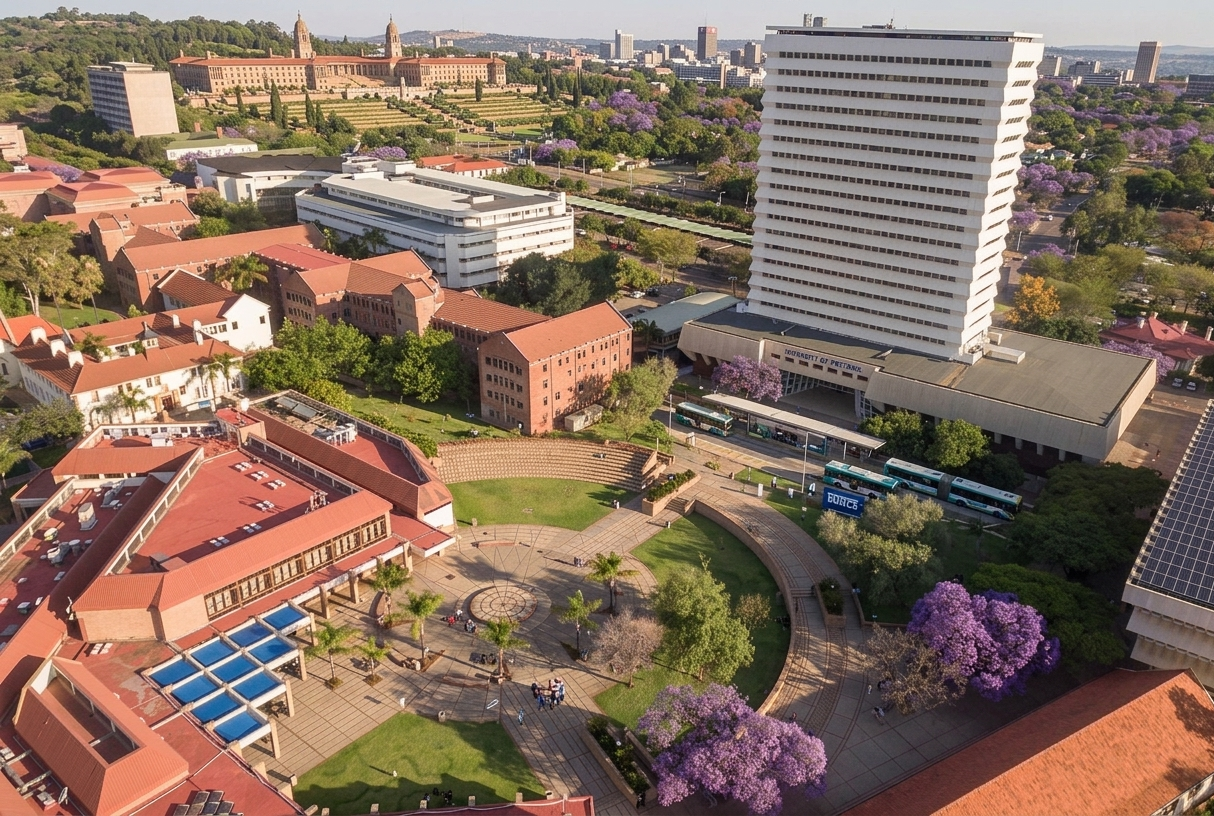
Pretoria’s student and academic population is among the largest in Africa. The gate ranges from trivial to eighteen months, and the returns track that difference closely.
These businesses serve students, academics and the institutions themselves, concentrated in Hatfield, Sunnyside, Soshanguve, Ga-Rankuwa and Arcadia.
Purpose-built student accommodation
Accredited student housing serving UP, TUT, UNISA contact students and the private colleges.
- Why Pretoria
- TUT alone enrols roughly 60,000 students and UP admitted about 9,700 first-years for 2026. Institutional residence capacity falls far short of demand, and NSFAS accreditation creates a payer that is not the student
- Capital
- R5m – R12m for a meaningful block, typically part-funded with mortgage or development finance
- Revenue model
- Rent per bed per month, frequently paid through institutional or NSFAS accreditation channels
- Gross margin
- 55–65% before finance costs, which are the single largest expense
- Key risk
- Accreditation status and the student funding policy environment. Unaccredited beds are worth substantially less, and disbursement changes flow straight to occupancy. December to February vacancy must be budgeted
- Compliance
- Institutional accreditation, municipal land use rights and building plan approval, fire and safety compliance, health certification for catering
- First contract
- Obtain accreditation before construction or conversion, not after. Location matters enormously: walking distance to campus or a direct transport route is the whole business
Academic editing, statistics and research support
Language editing, formatting, statistical analysis and methodology support for postgraduate students and academic researchers.
- Why Pretoria
- Four universities and the largest concentration of research councils in Africa produce an enormous volume of theses, dissertations, journal articles and research reports, much of it written by second-language English speakers who need professional editing to publish
- Capital
- R50,000 – R150,000. The lowest entry cost in this guide
- Revenue model
- Per-thousand-words editing, per-project statistical consulting, and retainers with departments and research units
- Gross margin
- 58–68%; the cost is your time and your associates’
- Key risk
- Ethical boundaries. Editing and statistical support are legitimate and demanded; ghostwriting is academic misconduct that will end the business and damage clients. Publish your scope of service explicitly and decline work outside it
- Compliance
- No formal licence, but institutional editing policies and a written ethics statement are commercially essential
- First contract
- Approach postgraduate coordinators and research units directly and offer to be listed as a recommended provider. Word of mouth among supervisors is the primary channel
Private bridging and examination-preparation college
A registered private college offering bridging programmes, foundation courses and professional examination preparation.
- Why Pretoria
- Very large numbers of students do not meet degree entry requirements, and professional bodies examine candidates who need structured preparation. The city’s institutional density makes it the natural location, and DHET registration is a genuine eighteen-month moat
- Capital
- R1.5m – R3.5m: premises, staff, accreditation process and eighteen months of operating cost before registration
- Revenue model
- Programme fees per student, with corporate and bursary-funded cohorts providing volume
- Gross margin
- 45–55%, with strong operating leverage once cohort sizes exceed the fixed teaching cost
- Key risk
- The registration process itself. Trading as an unregistered private college is unlawful and worthless, because qualifications must be recognised for students to enrol
- Compliance
- DHET registration as a private higher education or further education institution, Council on Higher Education programme accreditation, SAQA registration of qualifications, and QCTO accreditation for occupational qualifications
- First contract
- Run short, unregulated skills courses and examination preparation while registration proceeds. This funds the wait and builds the reputation you will need on day one
Online course production and instructional design
Production of digital learning content — filming, editing, instructional design, assessment build — for universities, colleges, corporates and professional bodies.
- Why Pretoria
- UNISA is headquartered here and is Africa’s largest distance-education institution; every contact university now runs substantial online provision, and government departments and professional bodies commission compliance and induction training continuously
- Capital
- R250,000 – R700,000: studio equipment, editing suite, learning management expertise
- Revenue model
- Per-course production fees, retained content programmes, and licensing where you own the material
- Gross margin
- 48–60%
- Key risk
- Scope creep on fixed-price projects, and clients who underestimate the effort in instructional design. Price by module with a defined revision limit
- Compliance
- No specific licence; intellectual property terms and POPIA compliance for learner data matter commercially
- First contract
- Produce one short course free for a department or professional body in exchange for a case study. Buyers in this market purchase almost entirely on demonstrated portfolio