Search business plans, case studies, industries and articles.
Business Funding
How to Write a Business Plan
· 118 min read
Part 11 of 15 · AI for business planning
Part 11: The AI Toolkit — Prompts That Actually Improve a Plan
AI will not write a fundable business plan for you. It will make you roughly three times faster at the parts that are drudgery, and — used adversarially — it will find the holes a credit analyst would find, while you still have time to fix them.
One principle governs everything in this part: AI drafts and challenges; you verify and decide. Any number that enters your plan must come from a source you can name, not from a model that sounds confident.
Chapter 59A working AI process for business planning
The seven-step AI-assisted workflow
1Structure. Have AI build your section outline and a question list per section. Ten minutes, saves hours.
2Research design. Generate interview guides, survey instruments and a competitor factor list. Then do the fieldwork yourself.
3Synthesis. Feed it your raw interview notes, IDP extracts and quotes; ask for patterns and contradictions.
4Drafting. Write your own rough version first, then ask AI to tighten it. Drafting from nothing produces generic text.
5Modelling support. Ask it to explain formulas, check logic, and build sensitivity structures — never to invent inputs.
6Adversarial review. Have it attack the plan as a credit analyst, an investor and a competitor, in three separate passes.
7Polish. Consistency check across numbers, terminology, tense and tone; then a plain-language pass.
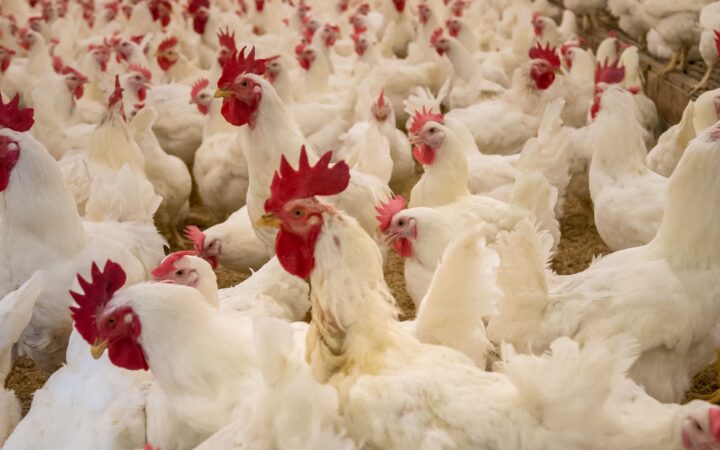
How to write a poultry broiler farming business plan in South Africa: the twelve-section structure, a complete worked financial model with cost per bird…
Working capital in South Africa 2026: how to size your requirement, the eleven sources from supplier credit to invoice discounting, a table that converts…
Funding for farmers in South Africa 2026: CASP and Ilima/Letsema grants, the Blended Finance Scheme, Land Bank, the Agro-Energy Fund, Mafisa, commercial banks and…