Search business plans, case studies, industries and articles.
Business Funding
How to Write a Business Plan
· 118 min read
Part 14 of 15 · Case studies
Part 14: Twelve Plans, and Why Each Succeeded or Failed
Composite cases drawn from typical South African funding outcomes. Each shows the business, the ask, the decision, and — most usefully — the specific factor that determined the outcome.
These are illustrative composites, not accounts of specific named businesses. The patterns, however, are entirely real and recur constantly.
Chapter 63Case studies
1. Restaurant — declined, then approved
Business
48-seat fast-casual restaurant, Gauteng shopping centre
Ask
R1.8m term loan for fit-out and equipment
First outcome
Declined. Forecast assumed 85% capacity from month one; no provision for pre-opening or ramp losses; food cost budgeted at 24% against a sector norm nearer 30–33%
What changed
Rebuilt with a 9-month ramp from 38% to 71% utilisation, food cost at 31%, four months of trading losses funded inside the request, and R420,000 of owner contribution
Second outcome
Approved at R1.62m over 60 months. The revised plan asked for less and got it — because it was believable
2. Day care / ECD centre — approved
Business
Registered ECD centre, 60 children, Western Cape
Ask
R680,000 for premises upgrade and compliance works
Decisive factor
DSD registration in place, zoning confirmed, fire and health clearance attached, and fee collection modelled at 88% with the bad-debt history to prove it
Outcome
Approved. The compliance pack did the work. In regulated sectors, licences attached beat narrative every time
3. Construction — declined
Business
CIDB Grade 5 civils contractor, R14m order book
Ask
R3.5m working capital
Why declined
The model ignored 10% retention and assumed payment 30 days after invoice; actual certification and payment history ran at 75–95 days. Real peak funding need was closer to R6.2m
Lesson
In construction, the order book is not the problem — the cash curve is. Model retention and certification lag explicitly, or the number you ask for will be wrong
4. Solar EPC and O&M — approved
Business
Commercial rooftop solar installer, KZN
Ask
R4.2m: asset finance for installation fleet plus working capital
Decisive factor
Signed 5-year O&M contracts across 14 installed sites providing R2.1m of contracted annual recurring revenue, ceded to the lender
Outcome
Approved. Recurring, contracted, cedable revenue is close to the ideal credit profile. The EPC work was treated as upside, not as the base case
Declined. Land held on a 3-year lease against a 7-year loan; yields assumed 18% above district average with no agronomic support
What changed
Lease extended to 10 years with a registered long lease; yields revised to district average plus 4% with a soil analysis and agronomist’s letter; seasonal working capital added
Second outcome
Approved with a Land Bank facility. Tenure security was the binding constraint, not the farming
6. Mining services — approved with conditions
Business
Contract earthmoving to a platinum operation, Limpopo
Ask
R11m asset finance for fleet
Issue
Single client; contract had 26 months to run against a 60-month finance term
Outcome
Approved subject to conditions: 30% deposit, cession of contract proceeds, a covenant requiring a second client by month 18, and a balloon structure aligned to the contract term. The applicant had raised the mismatch themselves in the risk register — which is why it was structured rather than declined
7. Township retail — approved
Business
Grocery and hardware, Eastern Cape township
Ask
R450,000 for stock and refrigeration
Decisive factor
18 months of bank statements showing R310,000 average monthly deposits, matching the stated turnover exactly, plus supplier account references
Outcome
Approved through a development funder. The plan was eleven pages. Verifiable trading history outperformed presentation quality
8. E-commerce — declined
Business
Direct-to-consumer homeware, national delivery
Ask
R2.5m equity for marketing and inventory
Why declined
CAC of R780 against a gross profit per order of R310 and a repeat rate of 9%. LTV/CAC below 0.5x — the business lost money on every customer acquired
Lesson
Growth capital accelerates whatever the unit economics already are. If they are negative, funding makes the loss larger and faster, and investors know it
9. Commercial cleaning — approved
Business
Level 1, 51% black-woman-owned, Gauteng
Ask
R900,000 for equipment and working capital
Decisive factor
Weighted pipeline of R2.16m reconciling to the year-one forecast, plus two ESD letters of support from listed corporates
Outcome
Approved. The ESD relationships supplied both a customer and a credibility signal, which materially de-risked the credit
10. Food manufacturing — approved (blended)
Business
Maize and legume snack processing, Free State
Ask
R18m for a production line
Structure
R11m IDC term debt, R4.5m the dtic cost-sharing incentive claimed in arrears, R2.5m owner and shareholder contribution
Decisive factor
Signed 24-month offtake with a national retailer covering 62% of installed capacity, plus a quantified import-replacement case
Outcome
Approved over eight months. Note the incentive was structured as reimbursement, not as project cash flow
11. Professional services — declined
Business
Engineering consultancy, 6 staff, R9m revenue
Ask
R2m for expansion into a second province
Why declined
94% of revenue traced to relationships held personally by the founder; no documented processes; no employment contracts with restraint provisions; year-two revenue would fall by more than half if the founder stepped back
Lesson
Key-person dependency is not a soft issue. It is a valuation and credit issue, and in professional services it is usually the binding constraint
12. Logistics — approved after restructuring
Business
Refrigerated distribution, 6 vehicles, Gauteng
Ask
R3.8m for four additional vehicles
First assessment
DSCR of 1.08x — too tight. Maintenance budgeted at R0.42/km against a realistic R1.15/km for refrigerated units
What changed
Two vehicles instead of four, maintenance corrected, a 6-month capital moratorium during the ramp, and an escalation clause added to the client contract
Outcome
Approved at R1.95m with DSCR of 1.51x. Phasing the request converted a decline into an approval
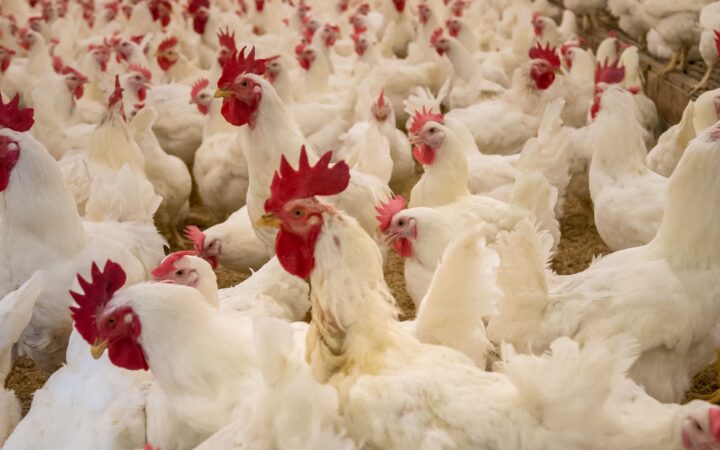
How to write a poultry broiler farming business plan in South Africa: the twelve-section structure, a complete worked financial model with cost per bird…
Working capital in South Africa 2026: how to size your requirement, the eleven sources from supplier credit to invoice discounting, a table that converts…
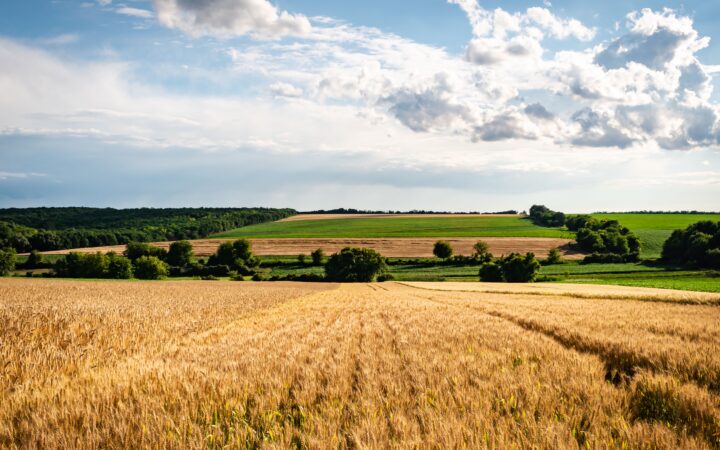
Funding for farmers in South Africa 2026: CASP and Ilima/Letsema grants, the Blended Finance Scheme, Land Bank, the Agro-Energy Fund, Mafisa, commercial banks and…