Part 1 of 6 · Start here
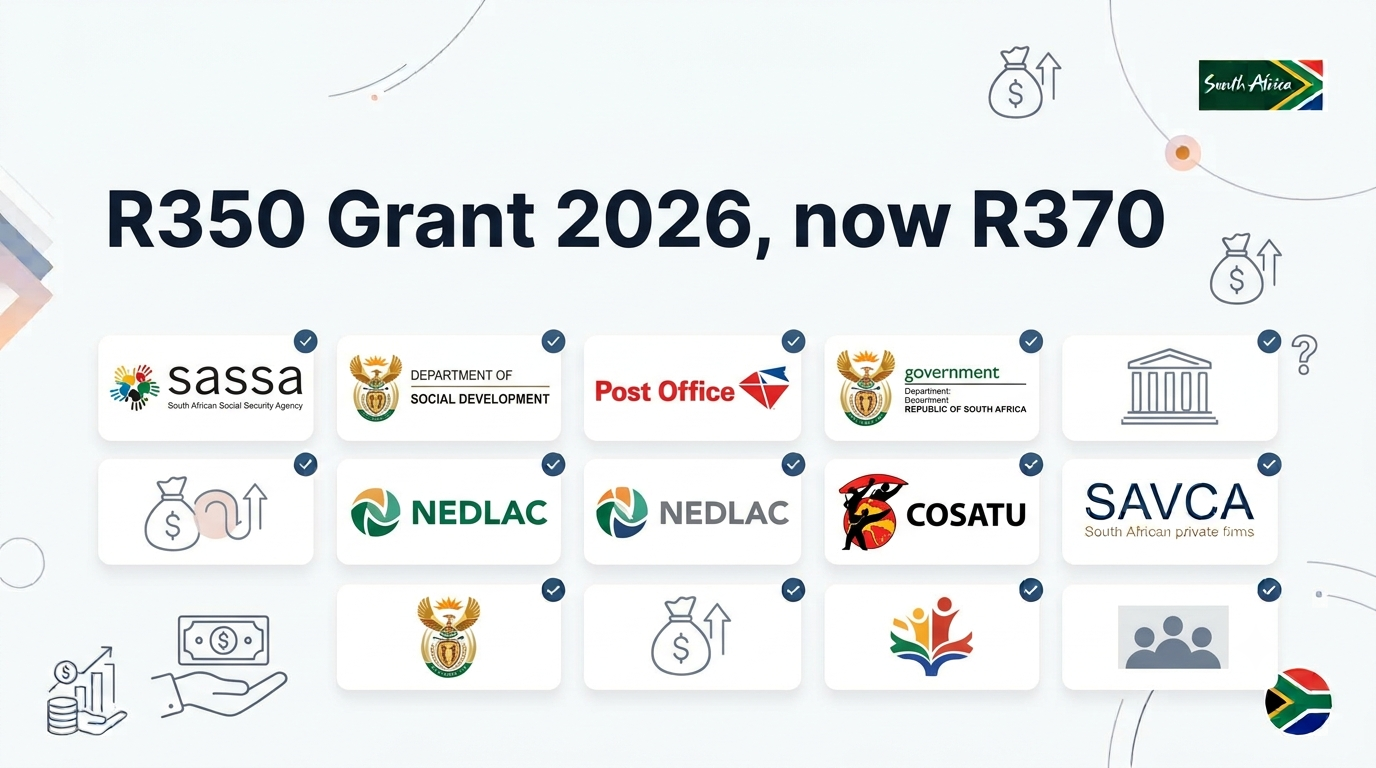
The R350 Grant Is Now R370: Who Qualifies in 2026
Everyone still calls it the R350 grant. The amount changed in April 2024 and has not moved since. This guide covers exactly how to apply for the SASSA SRD grant, what gets people declined, and what to do when it happens to you.
Who it is forWho the SRD grant is for
The SRD grant is for adults living in South Africa with no job, no income, and no other grant paid for their own support.
It started in 2020 as COVID relief and has been extended every year since. It is currently funded to 31 March 2027, with R36.4 billion allocated in the 2026 Budget. Government has said it will eventually be redesigned into a permanent livelihoods grant, but nothing has replaced it yet.
You can apply if you are a South African citizen, a permanent resident, a recognised refugee, an asylum seeker with a valid file number, or a special permit holder from Zimbabwe, Angola or Lesotho.
The six gatesSRD grant requirements: the six gates
You must pass all six. Failing any one of them means a decline, and the other five do not make up for it.
Every one of these is checked automatically against a government database. There is nothing to prove and nothing to upload.
The R624 ruleThe R624 income rule is what fails most people
SASSA scans your bank account every single month. Any money landing in it counts as income — including money that is not really yours.
The threshold is a hard line applied per calendar month, not an average across the year.
This rule is being challenged in court. In January 2025 the High Court in Pretoria ruled that the R370 amount, the R624 income threshold and the online-only application system were unconstitutional, and ordered that gifts and once-off payments be excluded from the income test. In January 2026 the Department of Social Development, SASSA and National Treasury appealed that ruling, arguing the cost of complying — estimated at between R70.6 billion and R139 billion a year — is unaffordable.
Until the appeal is decided, the rule as it stands still applies. Apply and appeal on the current rules, not on the ones the court ordered.
Before you startWhat to have ready before you apply
The whole application takes about ten minutes. Have these four things in front of you first, because the session times out.
Four things you need
- 1Your 13-digit ID number — or your asylum file number.
- 2A phone registered in your own name. This number gets locked to your application permanently. Do not use a friend’s phone.
- 3Your name exactly as it appears on your ID. One wrong letter fails the Home Affairs check.
- 4Bank account details in your own name — bank, account number, branch code. You can add these later, but the payment will not move until you do.